
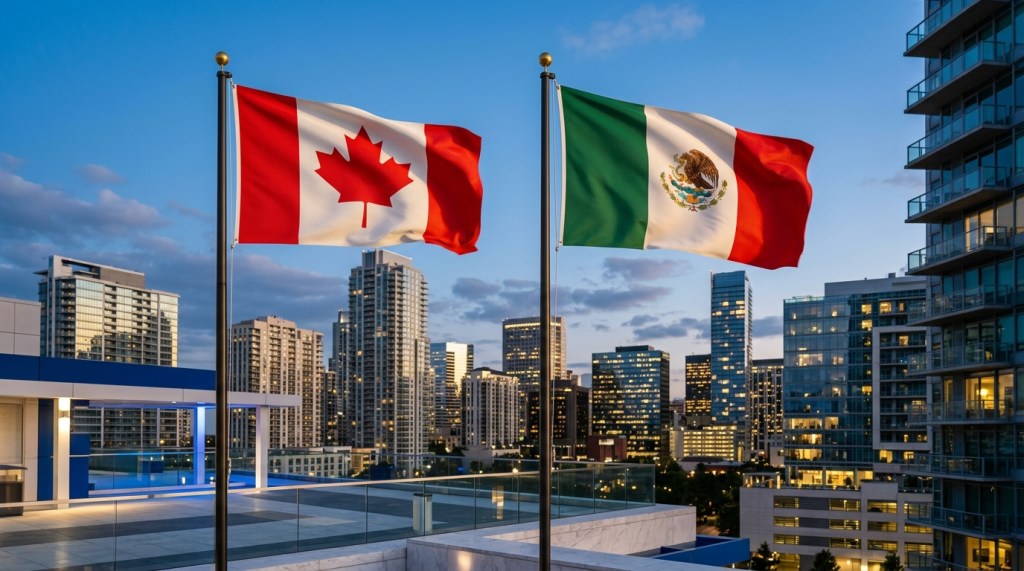
How to Invest in U.S. Real Estate as a Canadian or Mexican Citizen
Investing in U.S. real estate can be an attractive opportunity for international investors, including Canadian and Mexican citizens. The U.S. offers a wide range of real estate markets, from residential rentals and fix-and-flips to commercial properties and new construction.
The good news is that you generally do not have to be a U.S. citizen or permanent resident to purchase real estate in the United States. However, foreign investors should understand the financing, tax, legal, and ownership considerations before making an investment.
Can Canadian and Mexican Citizens Buy U.S. Real Estate?
Generally, yes. Canadian and Mexican citizens can purchase U.S. real estate, subject to applicable federal, state, and local laws.
Foreign investors can potentially purchase:
- Single-family homes
- Multifamily properties
- Commercial real estate
- Vacation properties
- Land
- Investment properties
- Fix-and-flip projects
The process can be different from buying property as a U.S. resident, particularly when it comes to financing, taxes, documentation, and transferring money internationally.
How Can Foreign Investors Finance U.S. Real Estate?
Depending on the investor’s circumstances, several financing options may be available.
Foreign-National Financing
Some lenders offer financing specifically for international investors. Requirements vary, but lenders may evaluate the investor’s income, assets, credit history, experience, the property itself, and the amount of money being invested.
Private and Hard Money Financing
Investors purchasing properties for renovation or resale may also explore private lending or other short-term financing options. These lenders may focus more heavily on the property’s value, investment strategy, and projected exit than traditional mortgage lenders.
Cash Purchases
Some international investors choose to purchase properties with cash. This can simplify the financing process and potentially make an offer more competitive, although the investor still needs to consider taxes, closing costs, insurance, and other expenses.
What Taxes Should Foreign Investors Consider?
Taxes are one of the most important issues for international real estate investors.
Depending on the investment and circumstances, a foreign investor may encounter U.S. federal income taxes, state taxes, property taxes, and tax obligations associated with selling the property.
Foreign investors should also understand FIRPTA, the Foreign Investment in Real Property Tax Act, which can affect the sale of U.S. real property by foreign persons.
Because tax treatment can vary significantly depending on the investor’s country of residence, property type, ownership structure, and investment strategy, it is important to consult a qualified tax professional familiar with cross-border real estate transactions.
Should You Use an LLC?
Some investors consider purchasing U.S. real estate through a U.S. LLC or another legal entity. An LLC may provide certain benefits depending on the circumstances, but it is not automatically the right structure for every investor.
The appropriate ownership structure can depend on factors such as:
- The type of property
- Number of investors
- Financing
- Liability considerations
- Tax treatment
- Whether the property will be rented or sold
Speak with a qualified attorney and tax professional before choosing an ownership structure.
Choose the Right U.S. Market
Where you invest can be just as important as how you finance the property.
International investors may consider markets based on factors such as population growth, employment, rental demand, property prices, taxes, insurance costs, and potential investment returns.
Popular markets can include areas throughout Texas, Florida, Arizona, Georgia, and other states, but investors should evaluate each property individually rather than assuming an entire state or city is a good investment.
What Documents Might You Need?
Foreign investors may be asked to provide additional documentation when purchasing property or applying for financing.
Depending on the lender and transaction, this could include identification, proof of income, bank statements, asset documentation, tax information, credit history, and documentation showing the source of funds.
Requirements vary from lender to lender, so international investors should ask about requirements before beginning the purchasing process.
Don’t Forget About Currency and Transfer Costs
Canadian and Mexican investors should also consider currency exchange rates and international transfer costs.
Changes in the exchange rate between your home currency and the U.S. dollar can affect the actual cost of purchasing and operating a property. International wire transfers and banking requirements should also be considered when planning your investment.
Final Thoughts
Canadian and Mexican citizens can generally invest in U.S. real estate without becoming U.S. citizens or permanent residents. However, international real estate investing requires careful planning around financing, taxes, ownership structure, currency exchange, and local regulations.
Before purchasing a property, consider speaking with professionals who understand both U.S. real estate and cross-border transactions.
Looking for potential financing for a U.S. real estate investment? Submit an inquiry through Small Business Funding Hub to explore potential funding options based on your project and financial situation.
Disclaimer: This article is for educational and informational purposes only and should not be considered legal, tax, immigration, financial, or investment advice. Laws and financing requirements vary by individual circumstances and jurisdiction. Consult qualified professionals before making an investment decision.
We also mention how, what makes investors not avoid it, it’s because there are certain, why people, foreign investors don’t invest because they believe that they need a business LLC here in the U.S., but it doesn’t apply. And of course, I’m going to add like a contact form to, you know, to speak. And then, you know, of course, I’ll send them the mortgage broker that I work with.
Yes — that should absolutely be a major part of the post, because you’re addressing a misconception that could stop someone from even exploring U.S. real estate.
I’d frame it carefully: a foreign investor generally does not need to already own a U.S. LLC simply to purchase U.S. real estate. An LLC can be useful in certain circumstances, but it’s an ownership/structuring decision, not a blanket requirement.
You can also use your contact form as the bridge to your mortgage broker without making it sound like you’re personally providing the loan.
Here’s a stronger version of that section:
One of the Biggest Misconceptions About Investing in U.S. Real Estate
One reason some international investors never pursue U.S. real estate is because they believe they must first establish a U.S. business or LLC before they can purchase property.
That is generally not the case.
Canadian and Mexican citizens can generally purchase U.S. real estate without being U.S. citizens, permanent residents, or already owning a U.S.-based LLC.
An LLC may be an option worth considering depending on the investor’s circumstances, property type, financing strategy, tax situation, and liability considerations. However, it should not be viewed as an automatic requirement for every foreign investor.
This distinction is important because the belief that a U.S. company is required can make international investors assume that investing in American real estate is too complicated or inaccessible.
What About Financing?
Buying a property and obtaining financing are two different questions.
While a foreign investor may be able to purchase U.S. real estate, financing requirements can vary depending on the lender and the investor’s financial profile.
Some lenders work with foreign nationals and may offer financing programs designed for international investors. Requirements can include documentation of income and assets, identification, down payment requirements, credit information, and documentation showing the source of funds.
That is why it can be helpful to speak with a mortgage professional before assuming that financing isn’t available.
Interested in Investing in U.S. Real Estate?
If you’re a Canadian or Mexican citizen interested in purchasing an investment property in the United States, you don’t necessarily have to figure everything out on your own.
Use the contact form below to tell us a little about your investment goals and the type of property you’re considering.
After reviewing your information, we can help connect you with an appropriate mortgage professional to discuss potential financing options and determine what programs may be available for your situation.
Start the conversation today.
Important: Submitting an inquiry does not guarantee financing or approval. Financing availability, terms, and eligibility are determined by the lender. This website is not a lender and does not make lending decisions. Consider consulting a qualified U.S. attorney and tax professional regarding your specific circumstances.


 BusinessFundingHub.com
Leave a comment